The Physics of Balance in Golf Bags: Why Engineering Trumps Weight
In the pursuit of the perfect round, the conversation often centers on the weight of the equipment. We weigh our clubs, we weigh our shoes, and we certainly weigh our bags. However, any seasoned golfer who has walked eighteen holes knows that a three-pound bag can feel like twenty if it is poorly designed, while a more substantial, well-engineered bag can feel practically weightless. This phenomenon is explained by the Physics of Balance in Golf Bags. At Kolf Maison, we have moved beyond the “lightweight” trend to focus on the structural load paths and ergonomic stability that define the Paganica collection. True luxury isn’t just about what you carry; it’s about how the bag carries itself.
This extensive exploration into the Physics of Balance in Golf Bags will detail the mechanical differences between mass-market construction and architectural engineering, the biological impact of load distribution on a golfer’s swing speed, and how Kolf Maison utilizes internal reinforcement to create a “zero-gravity” experience on the course.
The Weight Illusion: Mass vs. Distribution
The primary mistake made in modern golf bag marketing is the oversimplification of “lightweight” as the ultimate metric for comfort. When a bag is made excessively light, the first thing sacrificed is the internal frame. Without a rigid skeleton, the bag becomes a soft vessel that sags under the weight of fourteen clubs. When a bag sags, the center of gravity shifts outward and downward, away from the golfer’s natural spine alignment. This forces the muscles in the lower back and shoulders to work harder to stabilize the load, leading to premature fatigue.
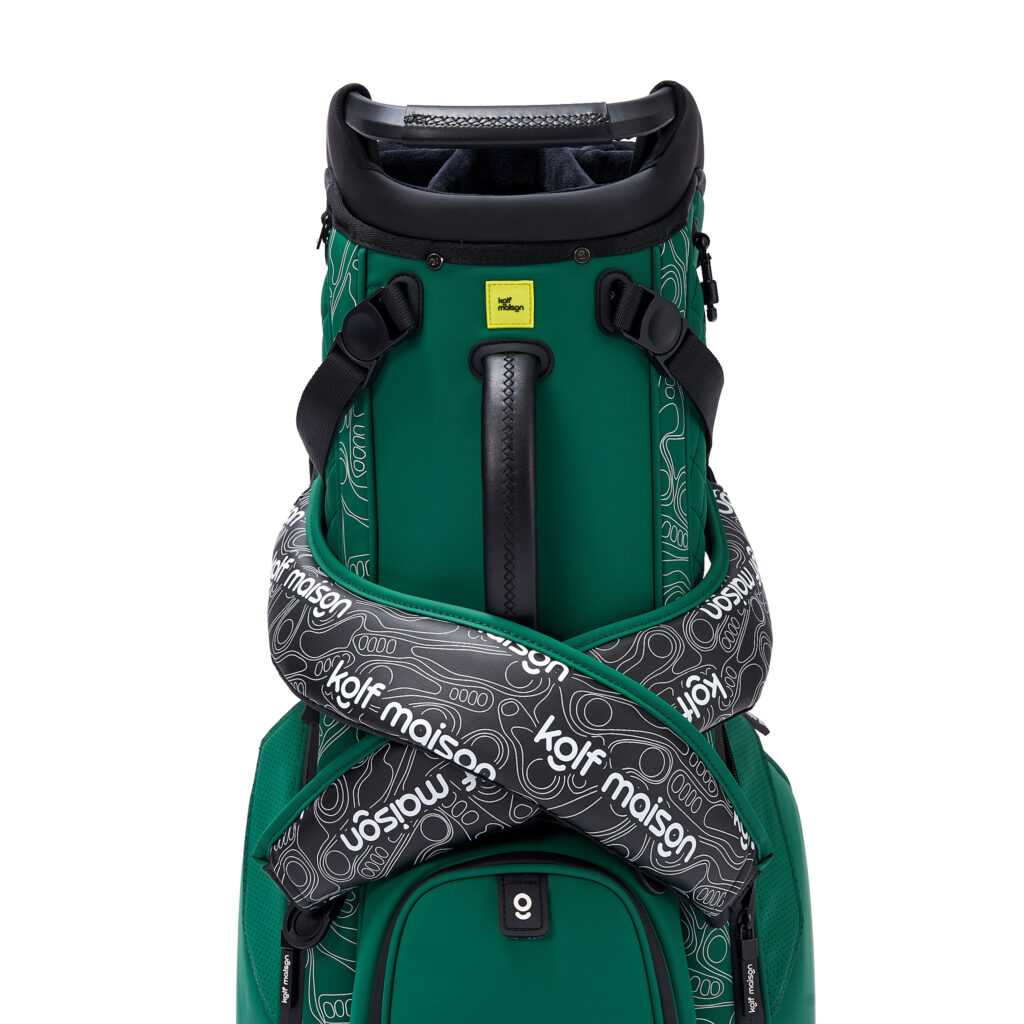
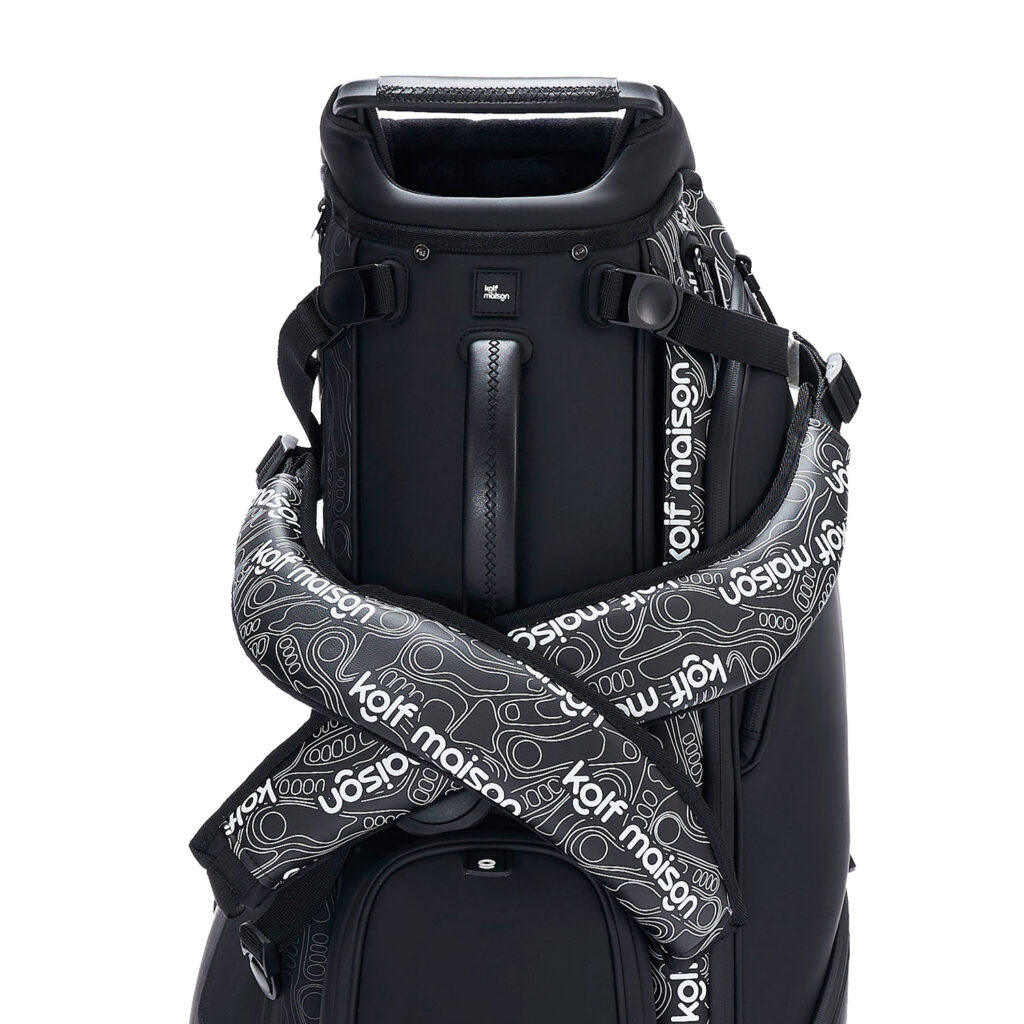
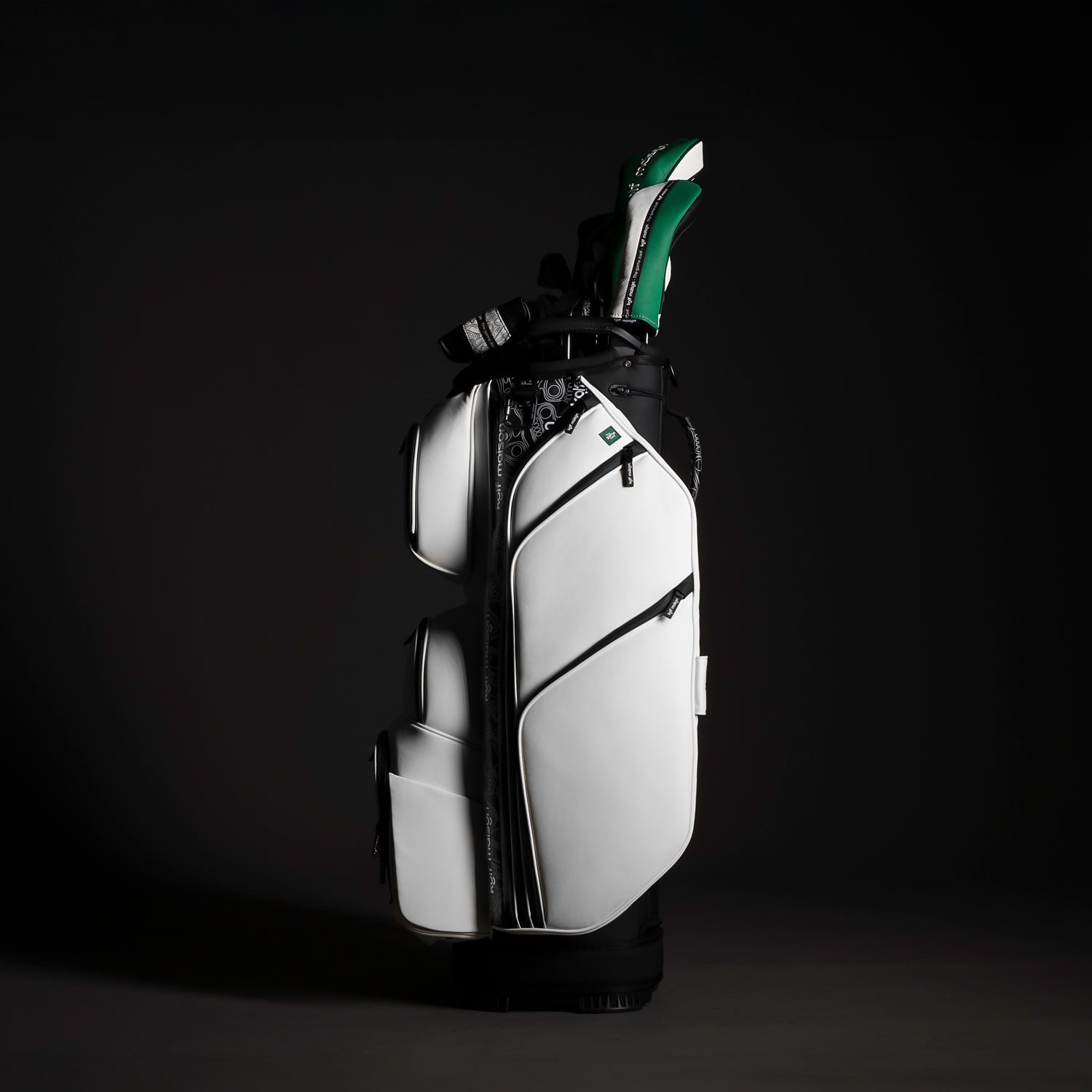
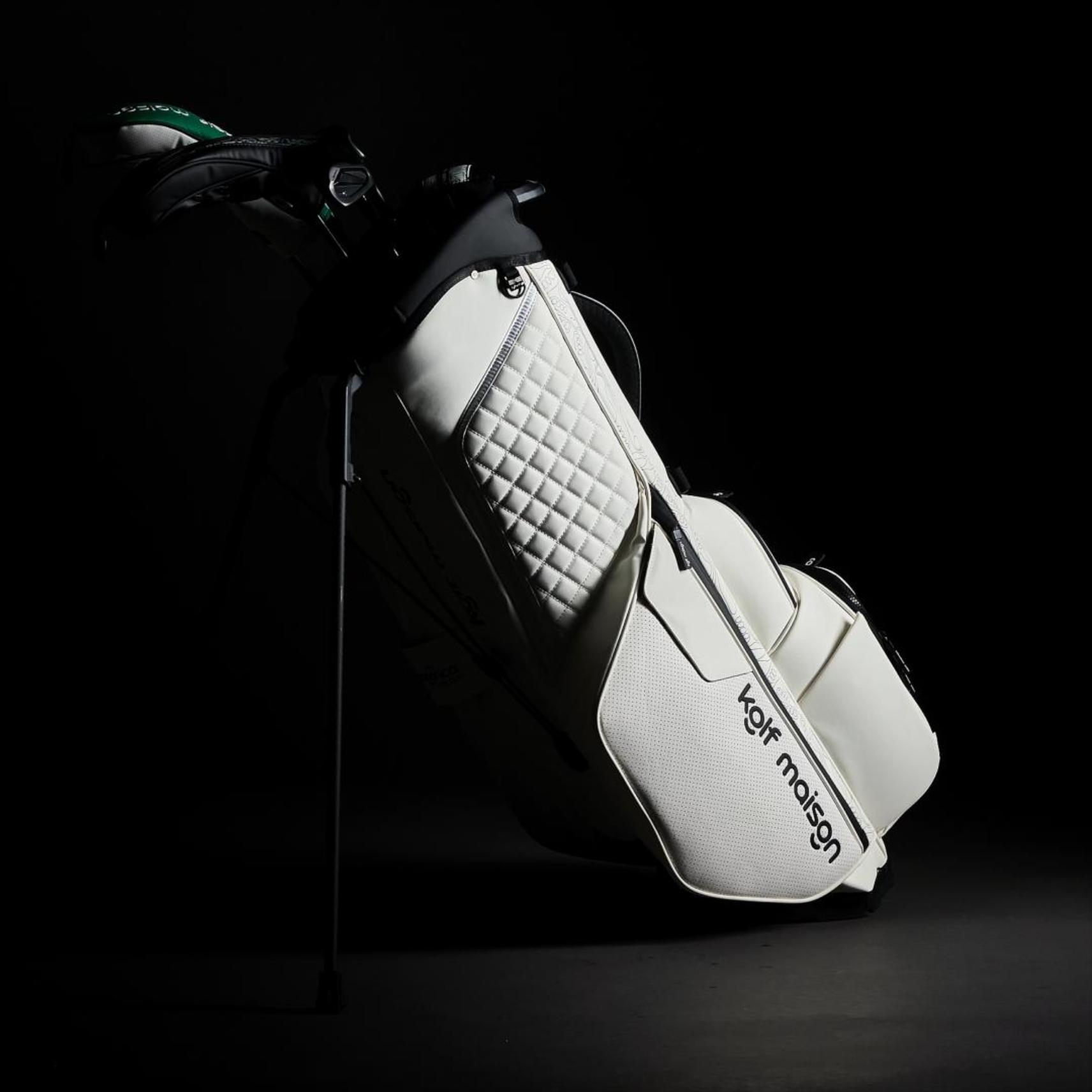
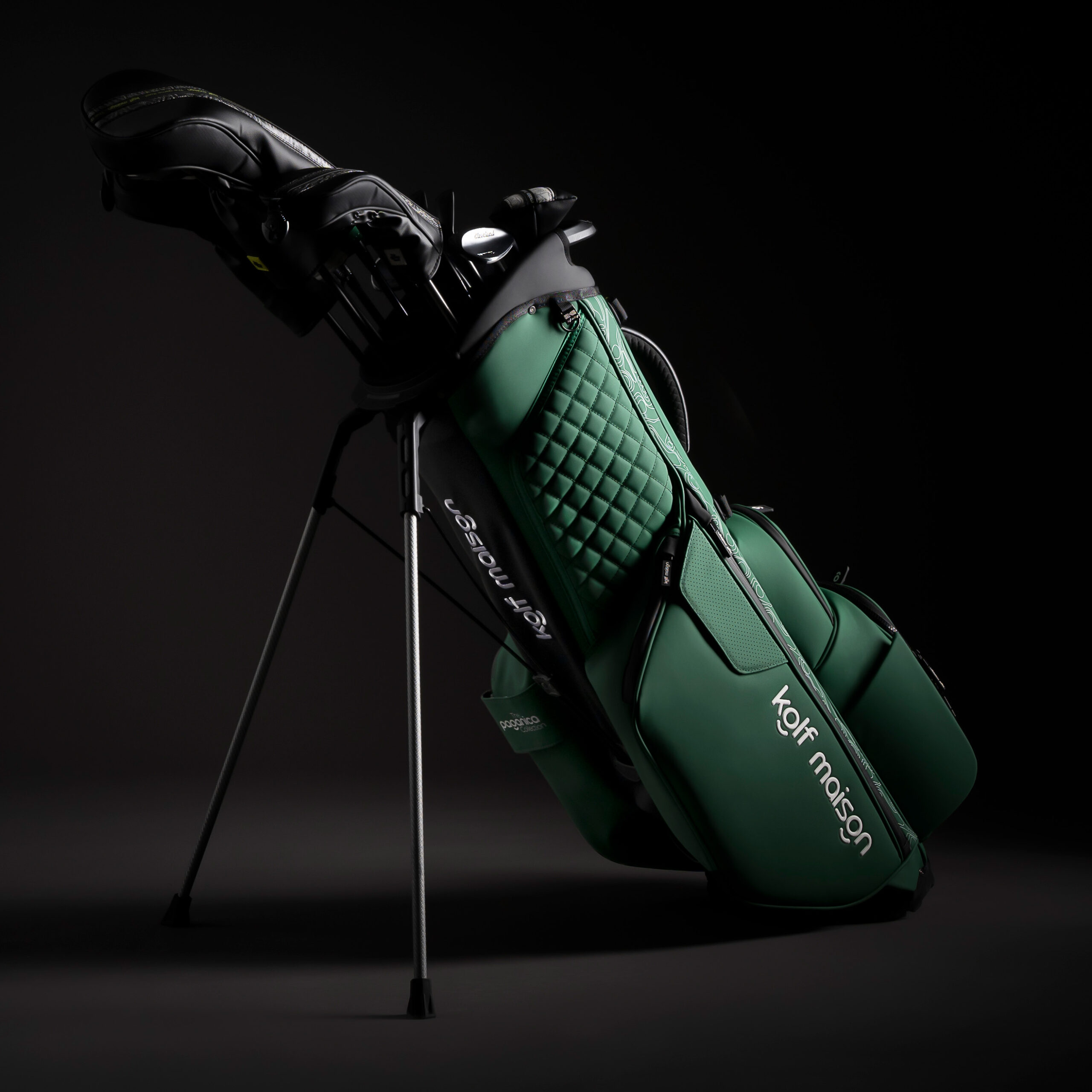
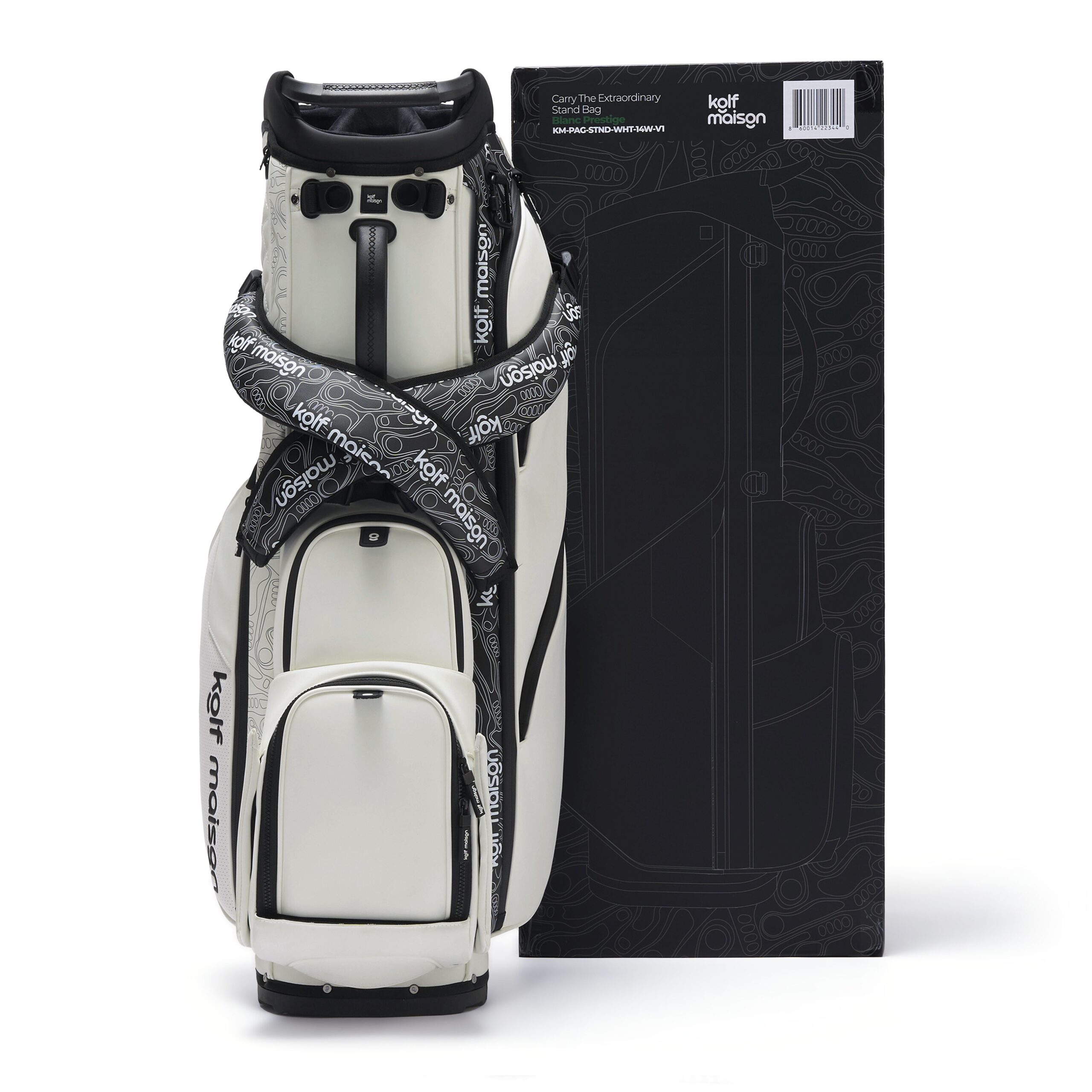
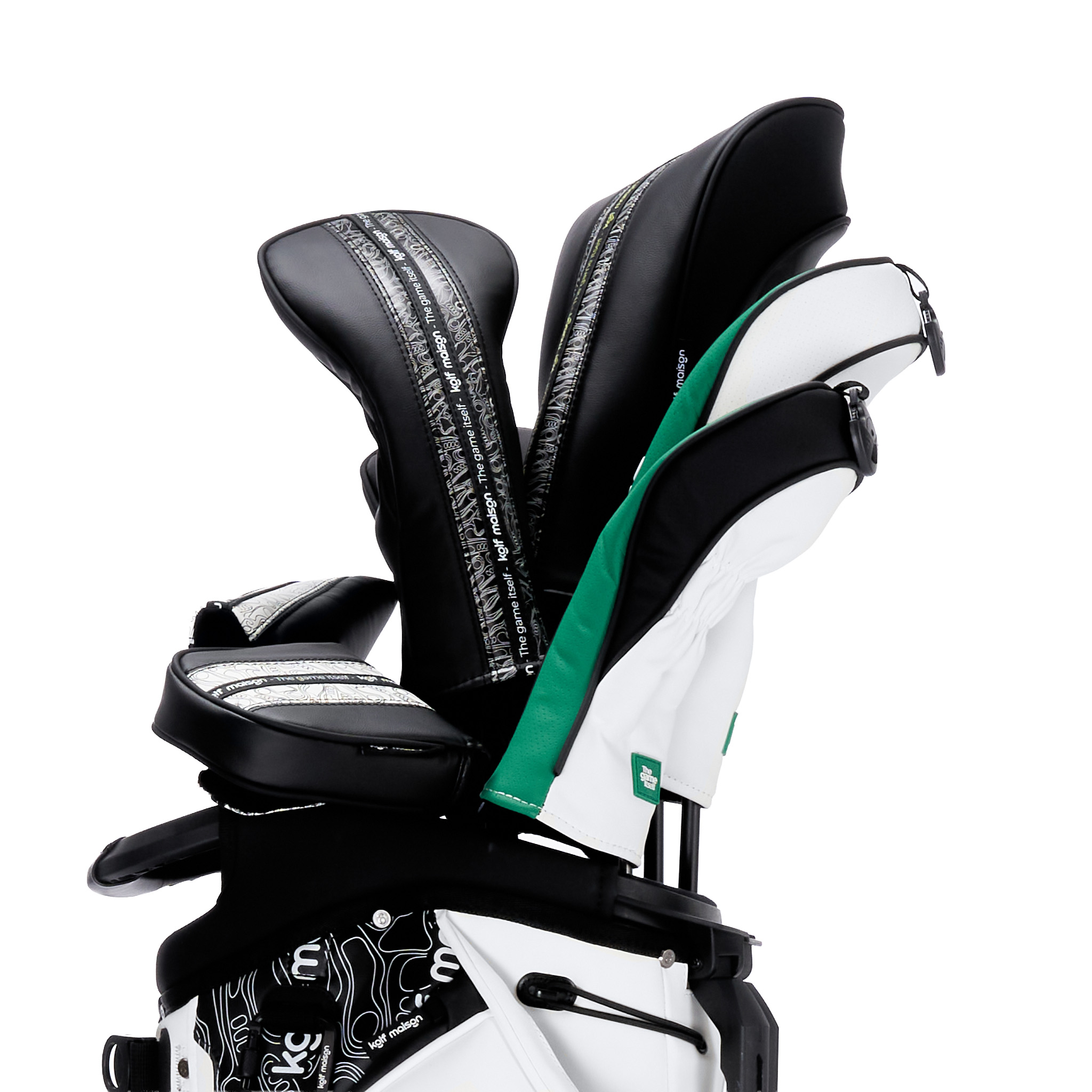
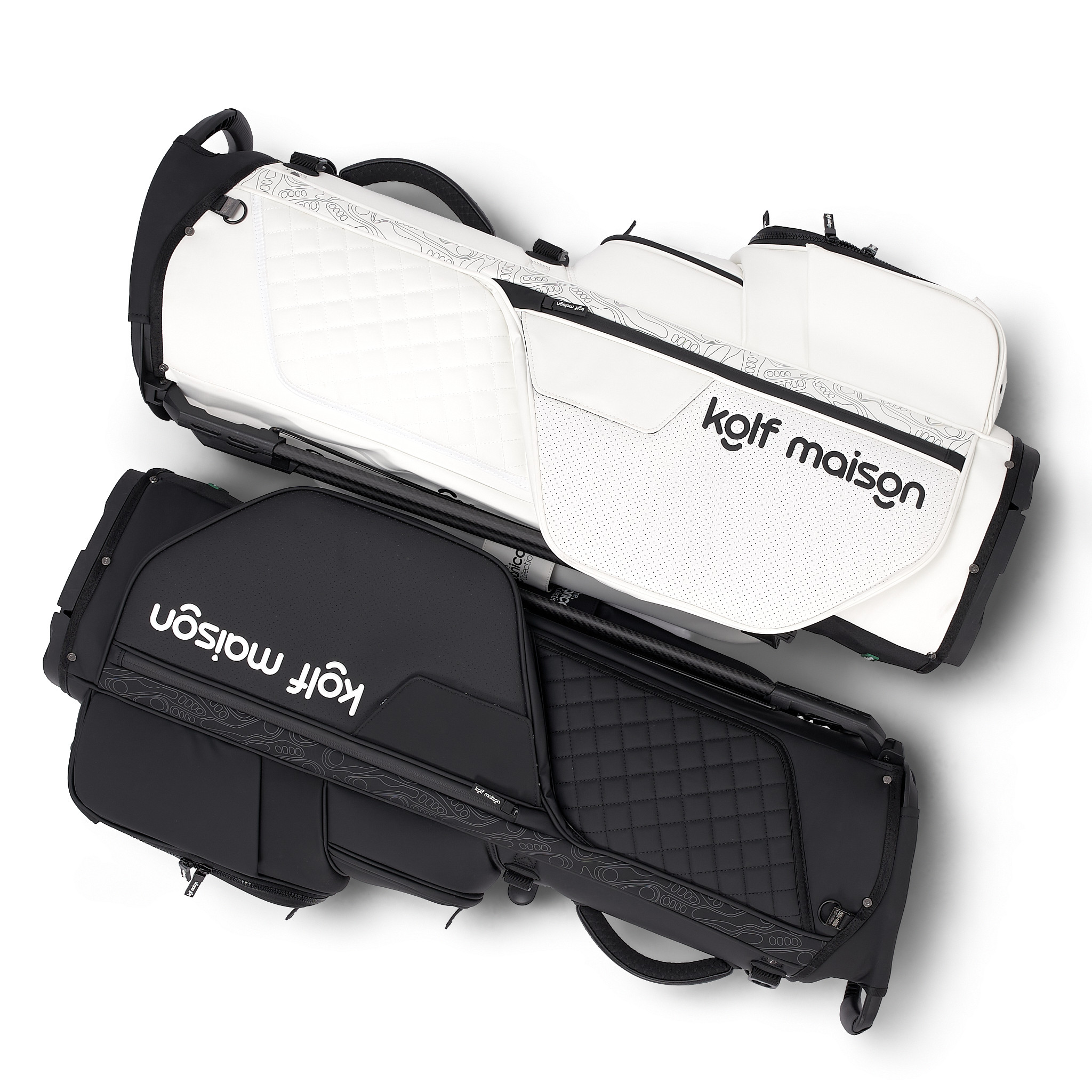
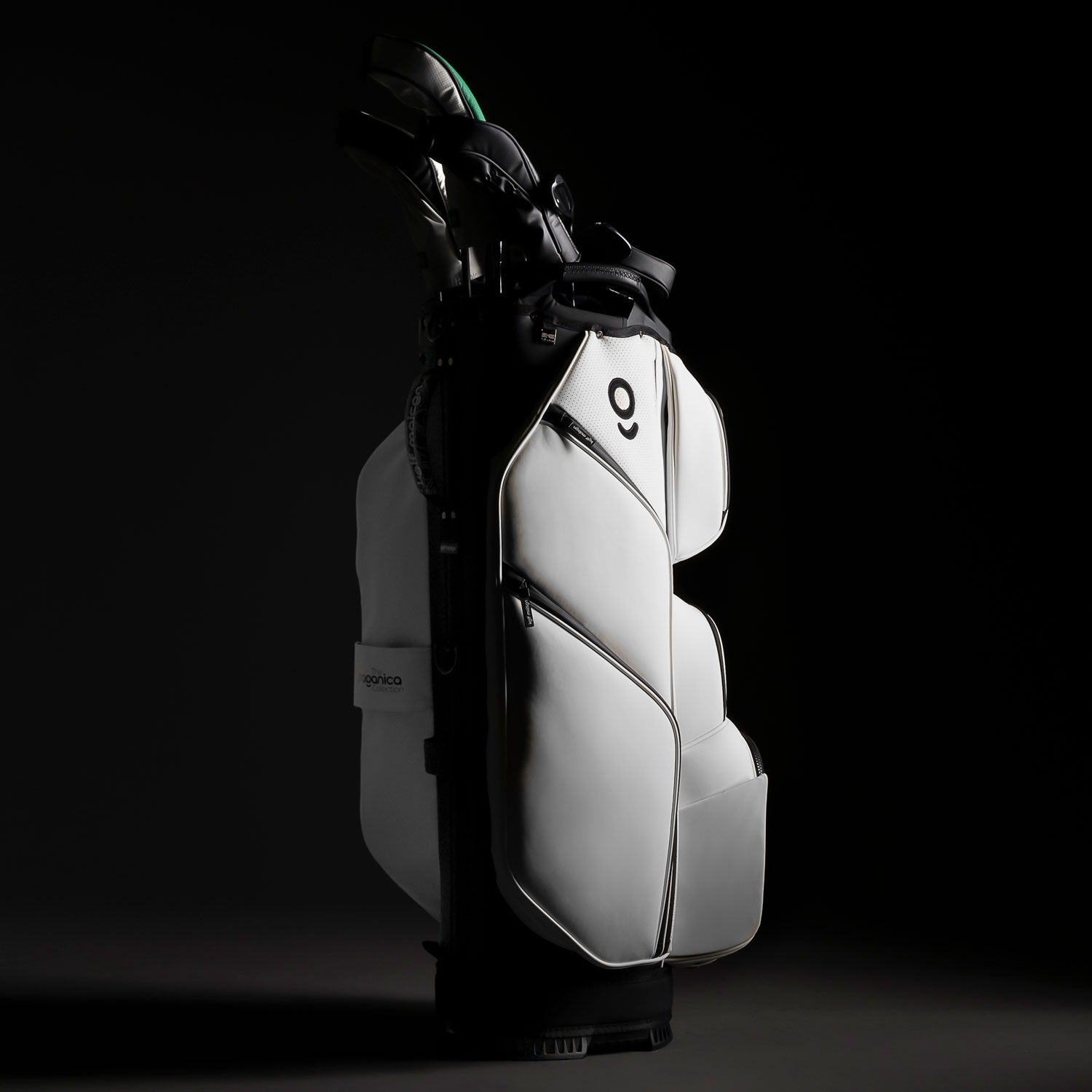
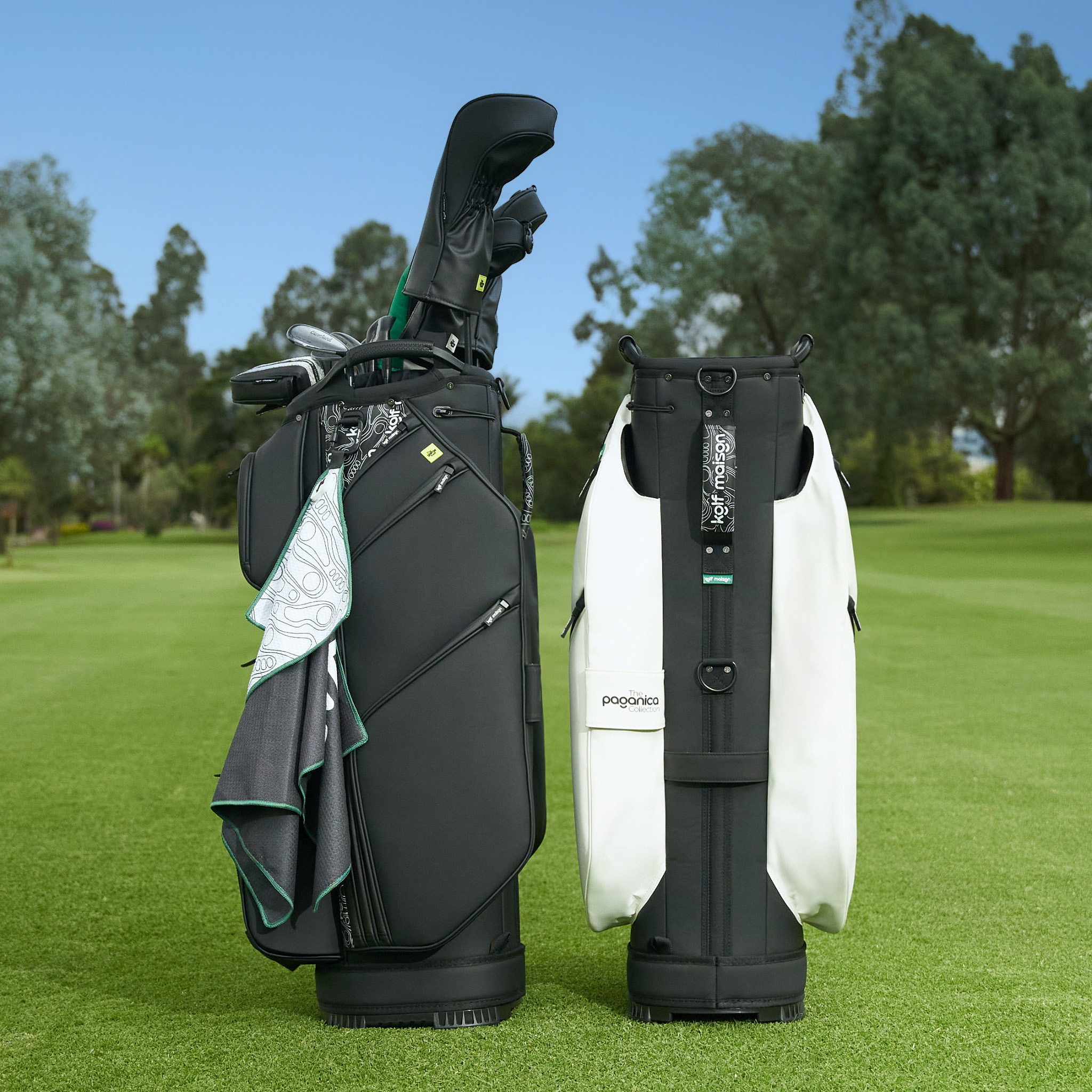
The Physics of Balance in Golf Bags dictates that stability is more important than raw mass. A bag with a structured, reinforced architecture—like the Paganica Stand Bag—uses internal stays to keep the weight tight against the body. By keeping the center of mass close to the golfer’s core, we reduce the “lever effect” that causes straps to dig into the shoulders. When the bag maintains its geometry, the weight is distributed across the hips and back rather than hanging off the trapezius muscles.
Structural Load Paths and the Spine
Every time you lift a golf bag, energy is transferred through the strap to your body. In mass-market bags, this transfer is chaotic. The soft materials stretch, the base plate tilts, and the clubs shift inside the dividers. This constant movement requires the golfer to make micro-adjustments to their gait, which consumes metabolic energy. Over 10,000 steps, this energy loss is significant.
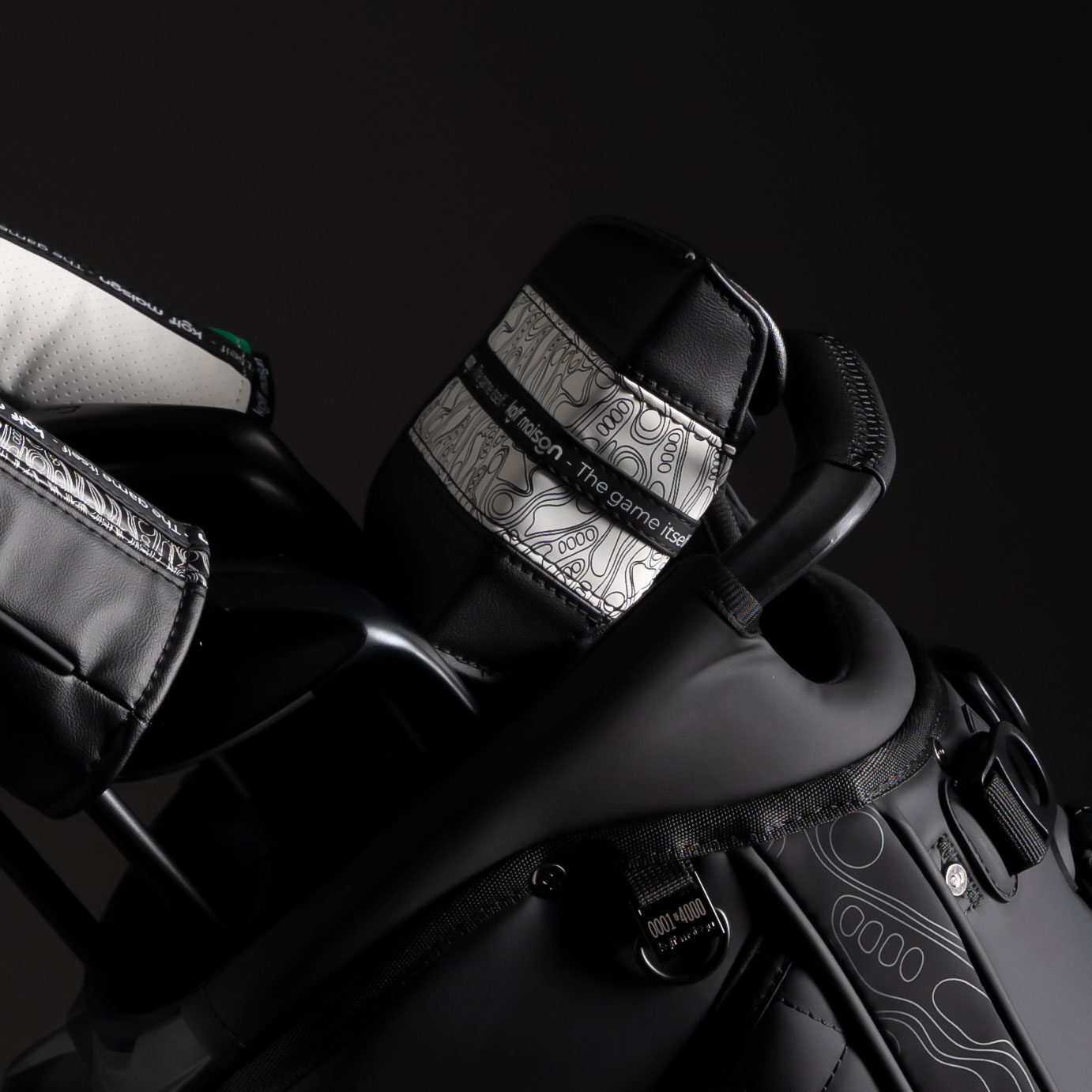
In the Paganica line, we engineer specific “load paths.” These are reinforced channels within the Premium Matte Microfiber that direct the weight toward the most stable points of the bag’s base and the golfer’s harness. By treating the bag as a piece of architecture rather than a textile product, we ensure that the clubs stay seated and the bag stays vertical. This is the Physics of Balance in Golf Bags in its most practical form: it preserves the golfer’s energy for the shot, not the walk.
The Anatomy of Fatigue: How Balance Saves Your Swing
Golf is a game of fine motor skills. Fatigue is the enemy of the “feel” required for a delicate flop shot or a pressure-packed putt. When your shoulders are strained from a poorly balanced bag, your thoracic mobility—the ability to rotate your upper body—decreases. A golfer who is physically tired by the 14th hole will inevitably see a drop in clubhead speed and an increase in “timing” errors.
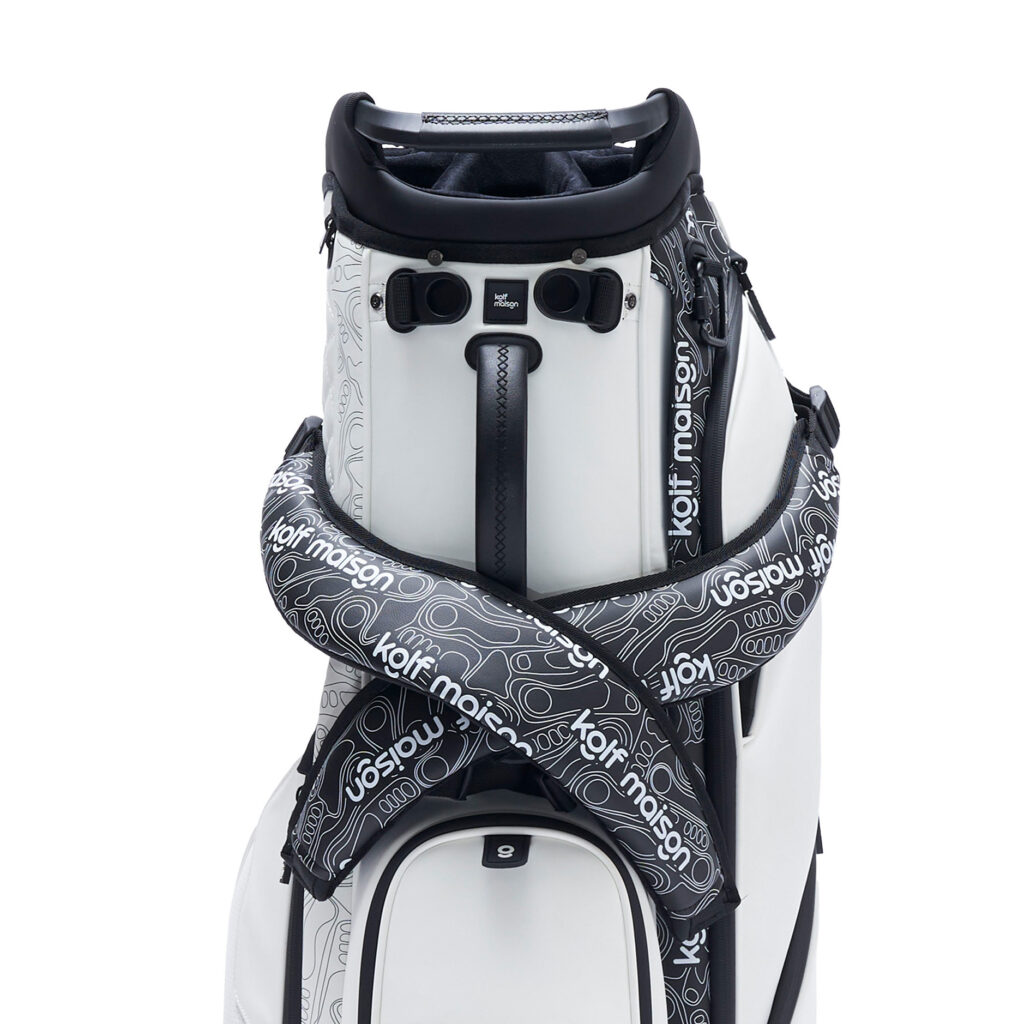
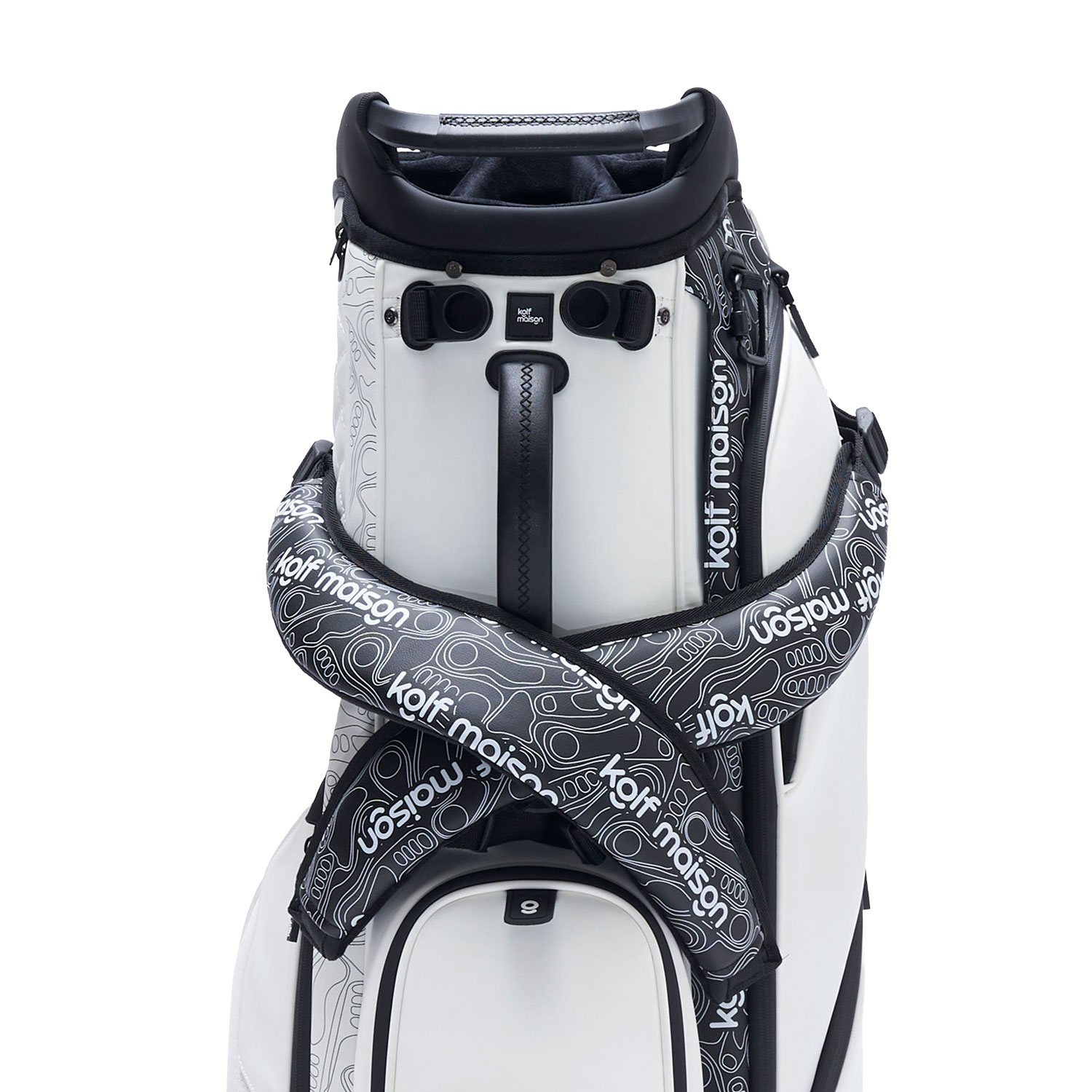
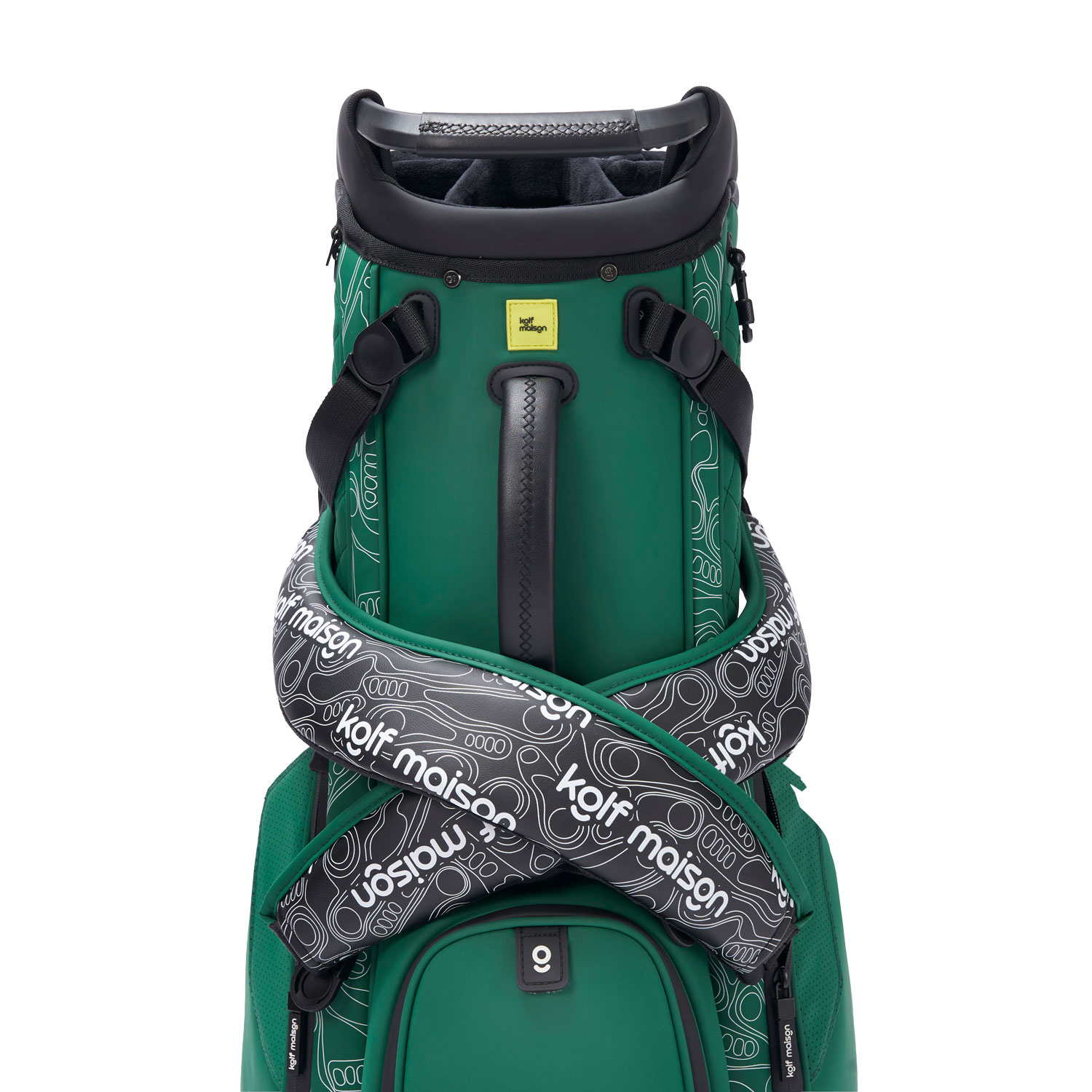
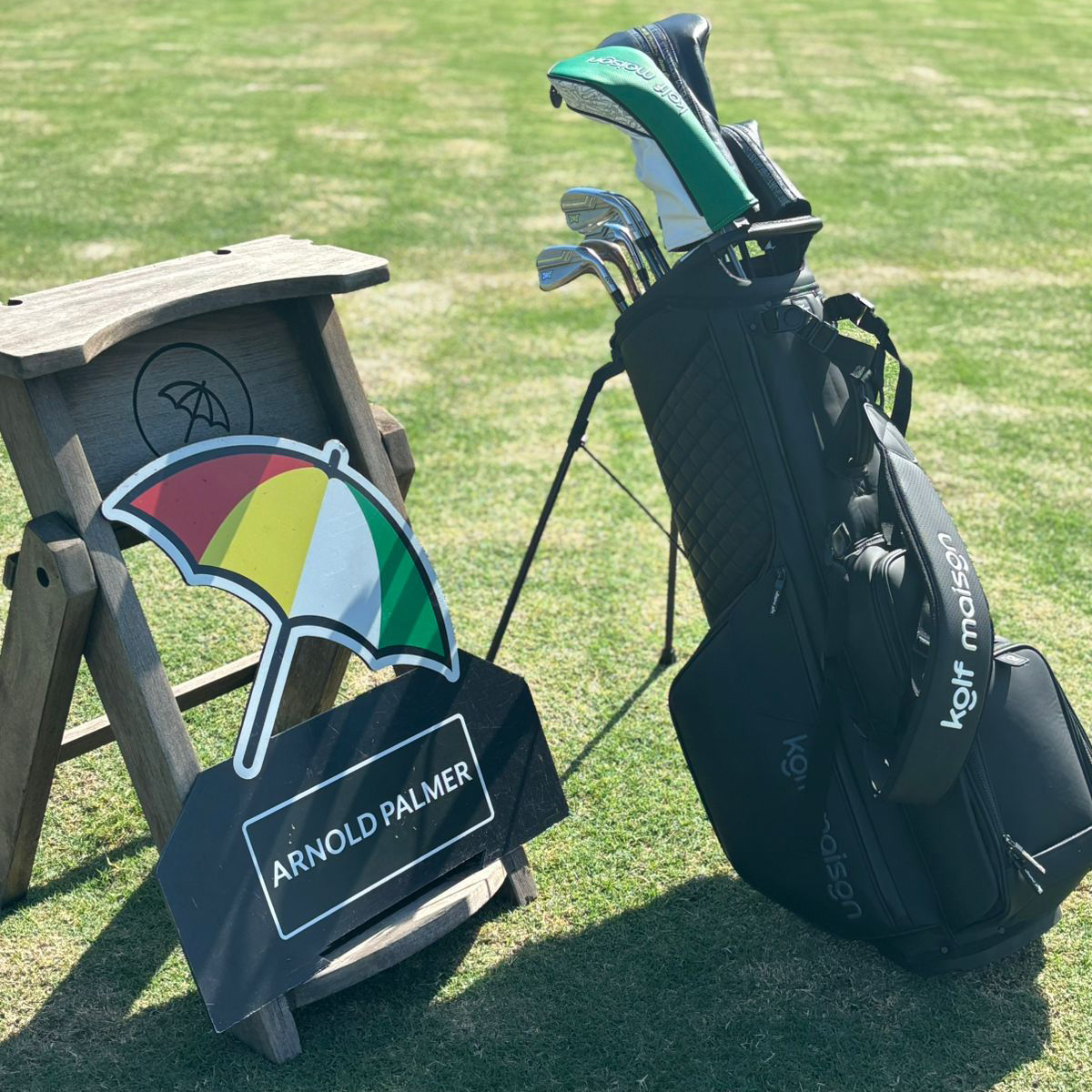
By applying the Physics of Balance in Golf Bags, Kolf Maison protects the owner’s swing. Our stand bags utilize a low-profile leg mechanism that lowers the center of gravity when the bag is placed on the ground, preventing it from tipping on uneven lies. When carried, the dual-strap system is calibrated to synchronize with the bag’s internal frame, ensuring that the load remains centered even as you move across hills. This isn’t just a convenience; it is a performance advantage.
The High-Density Base Plate
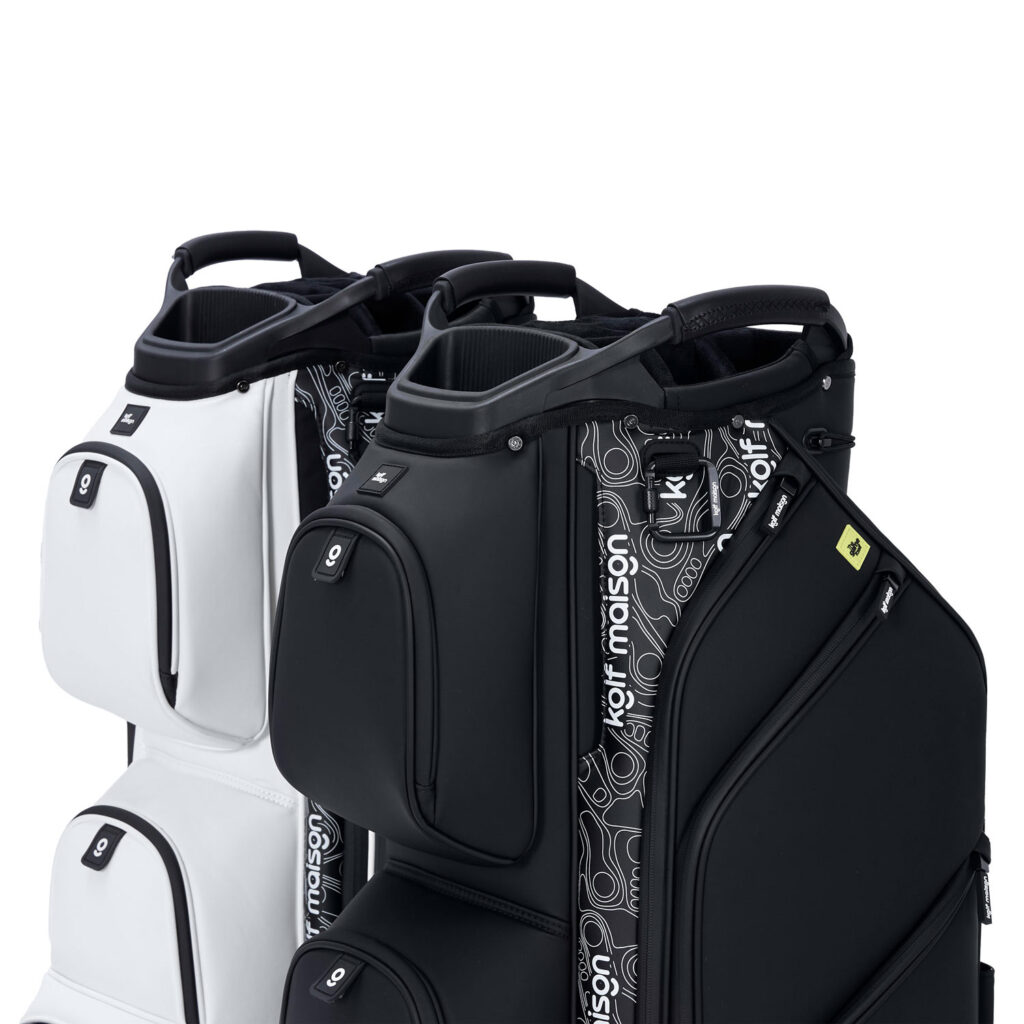
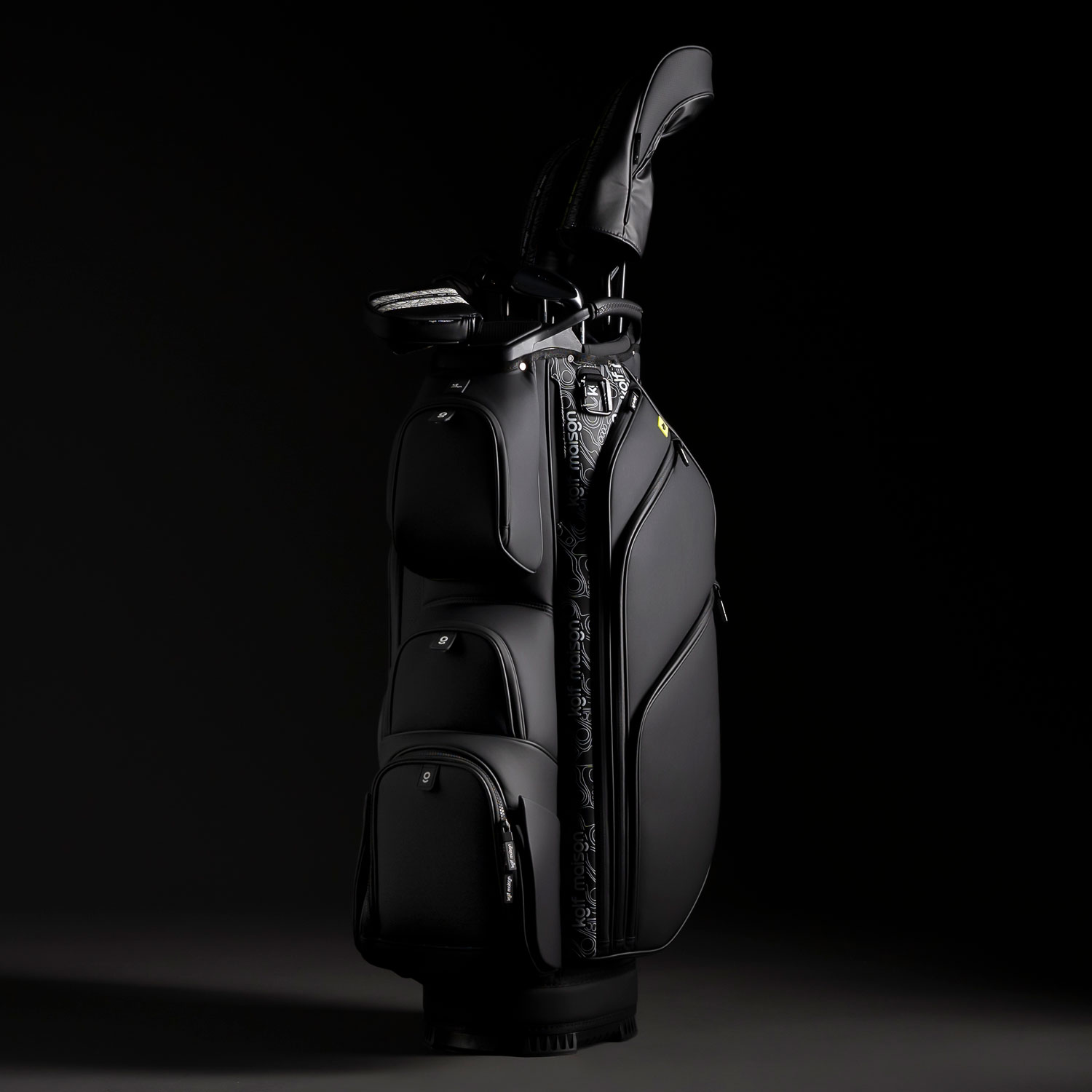
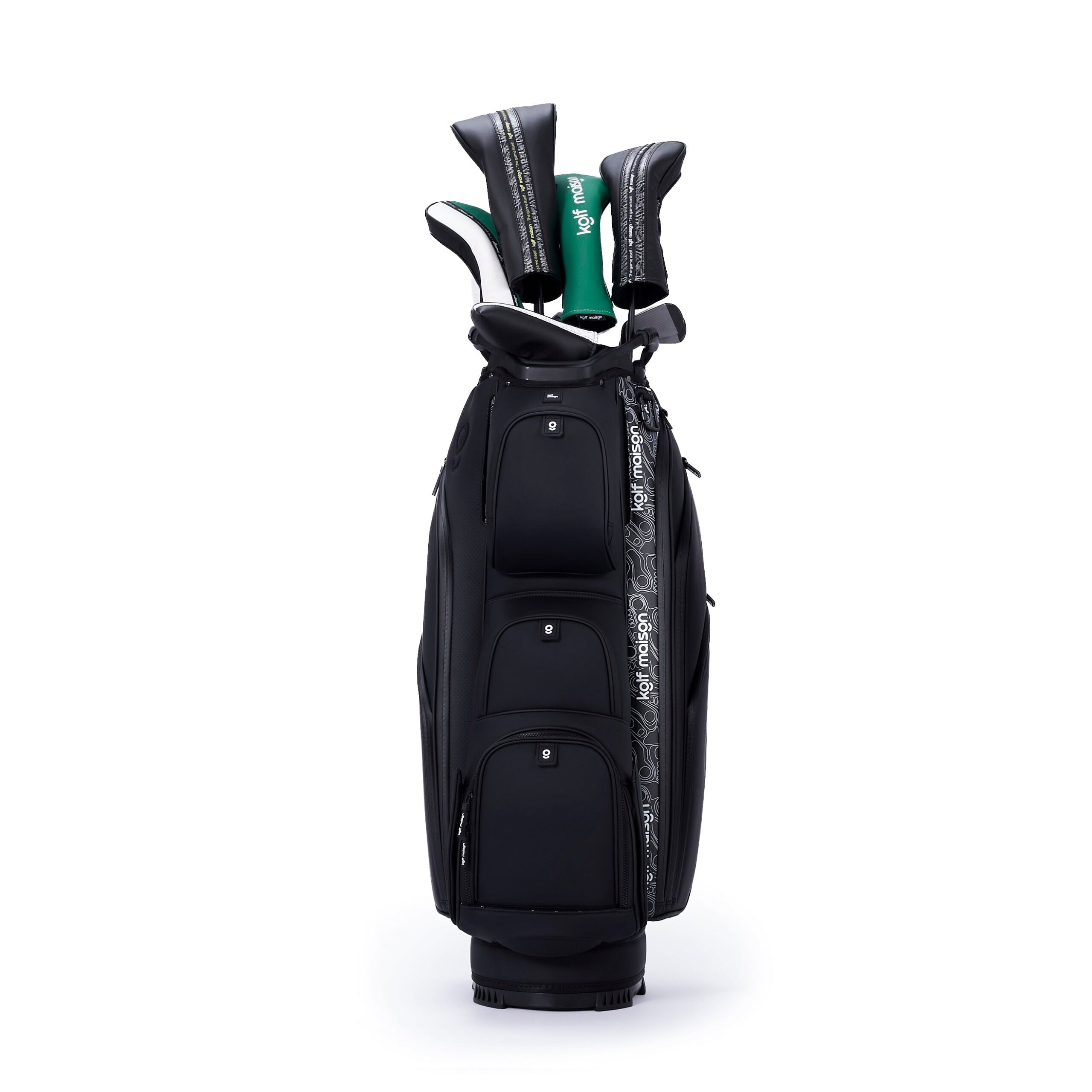
A critical component often overlooked in the Physics of Balance in Golf Bags is the base. A mass-market bag often uses a generic, thin plastic base that flexes under weight. This flex causes the clubs to “bunch” at the bottom, creating a top-heavy imbalance. Kolf Maison bags utilize high-density, anti-flex base plates. This solid foundation ensures that club grips stay separated and weight stays low. This “bottom-up” stability is what allows our cart bags, such as the Paganica Cart Bag Blanc Prestige, to sit perfectly upright on any terrain without the “cart-lean” that plagues lesser equipment.
Engineering the Equilibrium: Materials and Reinforcement
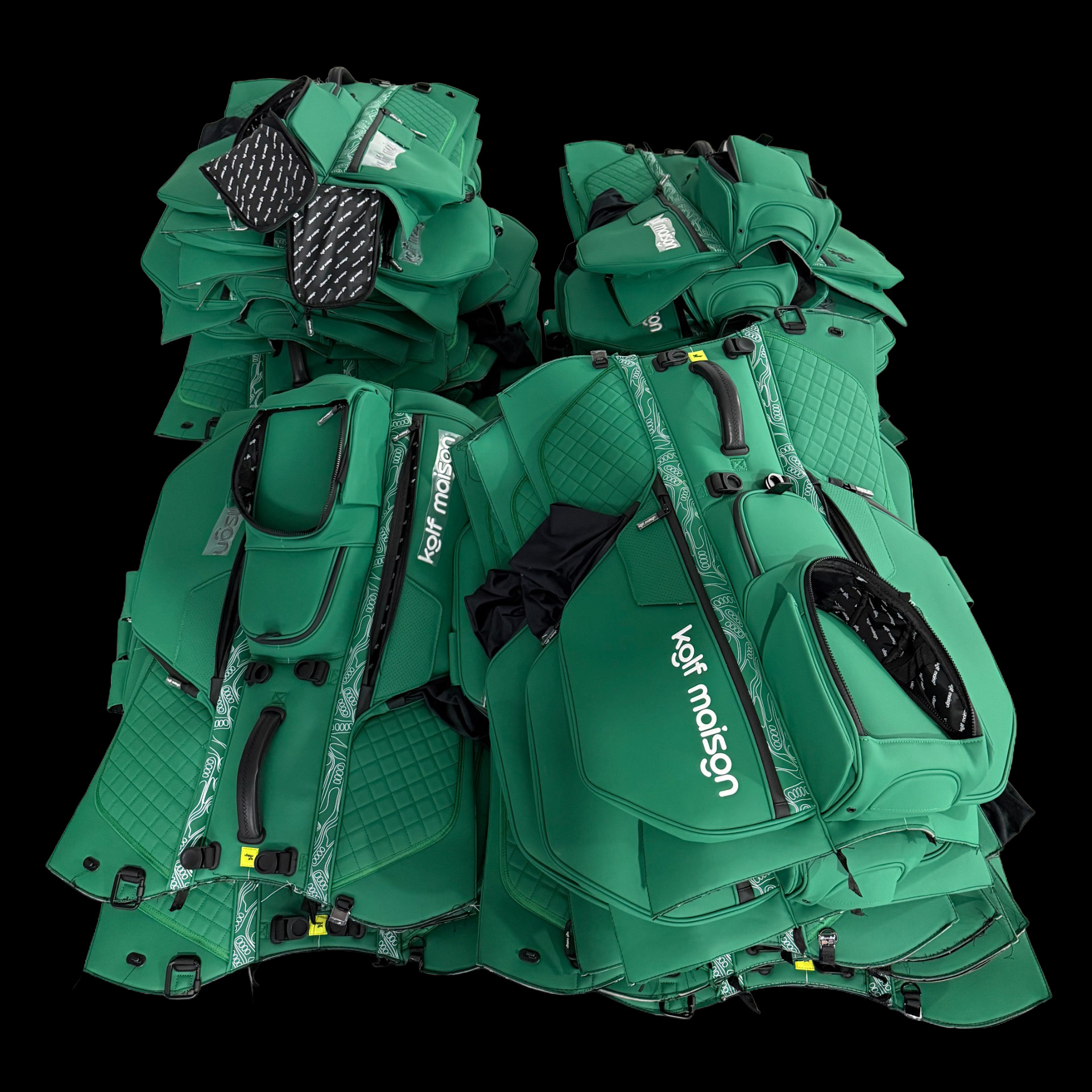
The materials used in a bag contribute directly to its balance over time. As we detailed in our study of True Scarcity, we use a Premium PU Lux Ultra-Soft Leather that has been batch-tested for tensile strength. Why does this matter for balance? Because materials that stretch under load are the primary cause of bag deformation.
When a bag’s fabric stretches, the internal compartments shift. This creates a “dynamic load” where the weight is constantly moving. The Physics of Balance in Golf Bags requires a “static load”—where the weight stays exactly where the designer intended. Our material, verified through ISO 3377 tear strength testing and ASTM D5034 tensile testing, resists stretching. This ensures that the architectural integrity of the bag—and thus its balance—remains identical in year five as it was on day one.
Counter-Balance and the Integrated Essentials
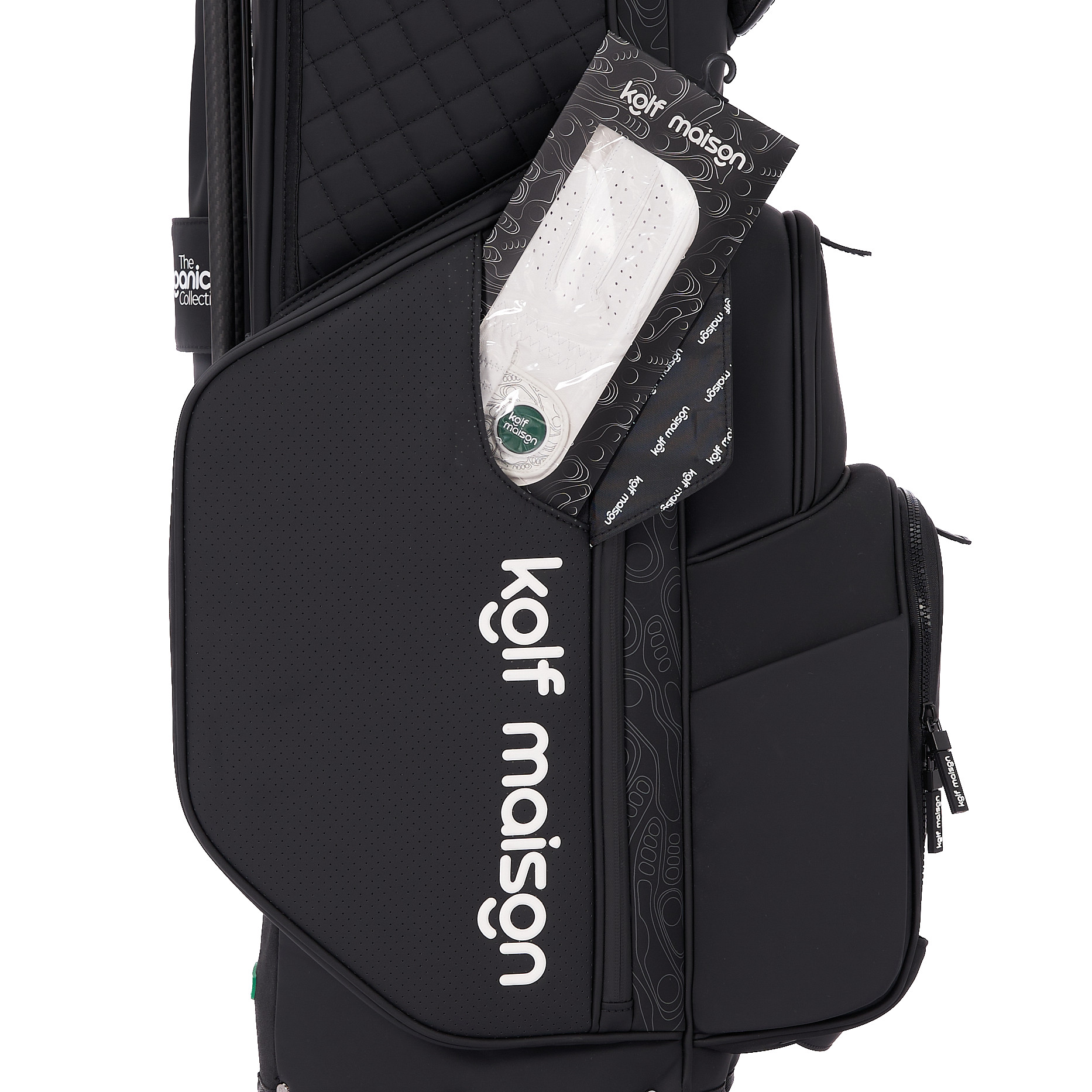
Even the placement of pockets in the Paganica collection is governed by the Physics of Balance in Golf Bags. We utilize a counter-balance system where the weight of accessories (rangefinders, balls, water bottles) is distributed symmetrically across the bag’s axis. This prevents the “sideways tug” that causes many bags to feel lopsided when fully loaded.
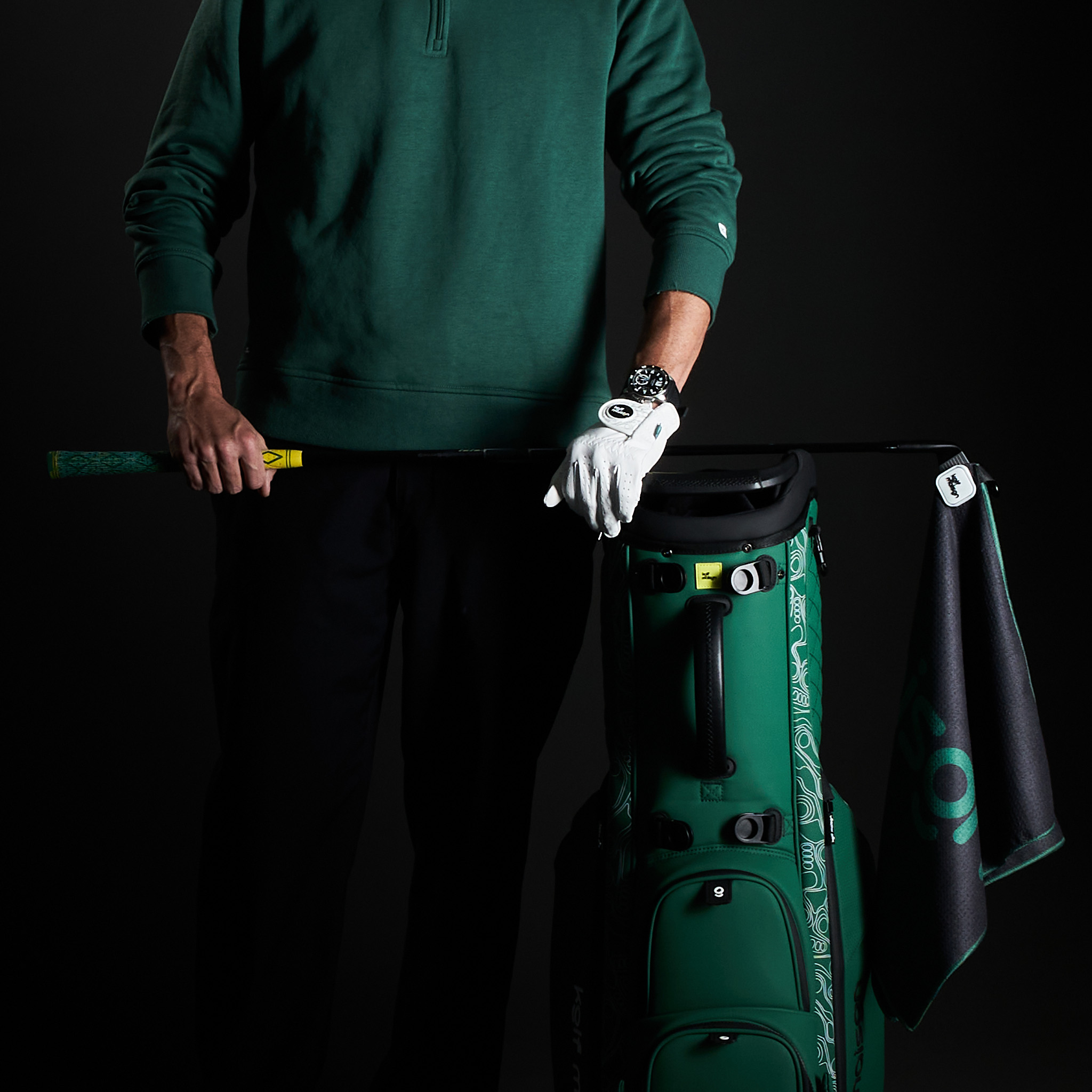
Furthermore, our Golf Essentials Collection is designed to fit into specific “balance zones.” The magnetic microfiber towels and precision divot tools have dedicated attachment points that keep the bag’s silhouette clean and its weight centered. This is the difference between a bag that is a collection of parts and a bag that is a unified machine.
The Cultural Shift Toward Engineered Comfort
As the golf world moves away from the “billboard” era of loud, heavy staff bags and moves toward a more refined, executive aesthetic, the focus has shifted toward the Physics of Balance in Golf Bags. Modern luxury golfers are more educated; they understand that “premium” is a function of engineering, not just a high price tag. They are looking for equipment that respects their body as much as it respects the game.
Kolf Maison stands at the forefront of this shift. We don’t build bags for the masses; we build them for those who understand that the walk should be as enjoyable as the strike. By limiting our production to 4,000 units, we ensure that the complex internal engineering required to achieve this perfect balance is never compromised for the sake of speed. This is Considered Luxury—where every ounce has a reason, and every load path has a purpose.
Final Thoughts on Structural Integrity
The next time you lift your golf bag, ask yourself: is it fighting your body or supporting it? The Physics of Balance in Golf Bags is the silent partner in your round. It is the reason you feel fresh on the 18th tee and why your equipment remains silent while others clatter. At Kolf Maison, we have mastered the equilibrium. We don’t just carry clubs; we carry a standard of excellence that is visible in every stitch and felt in every step.
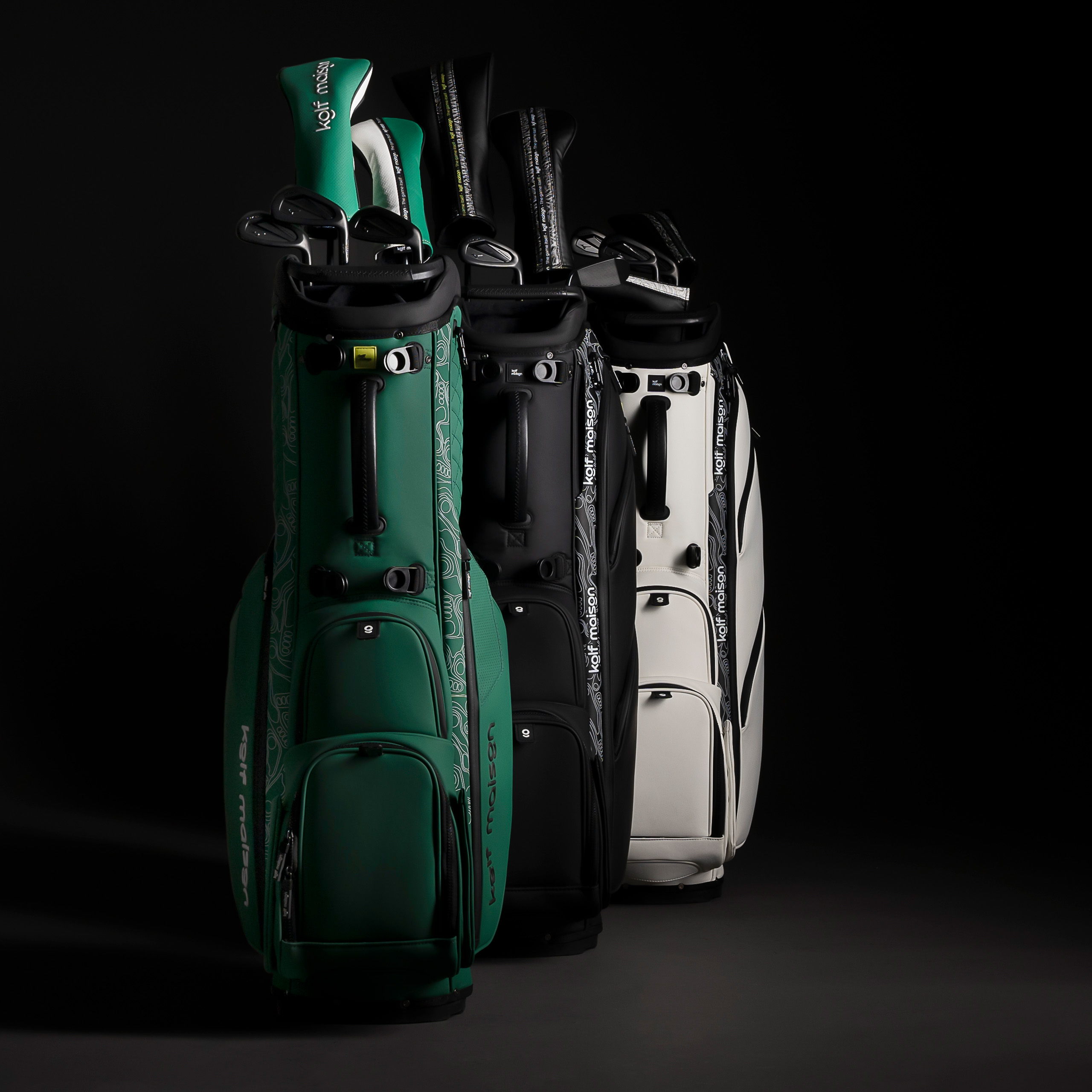
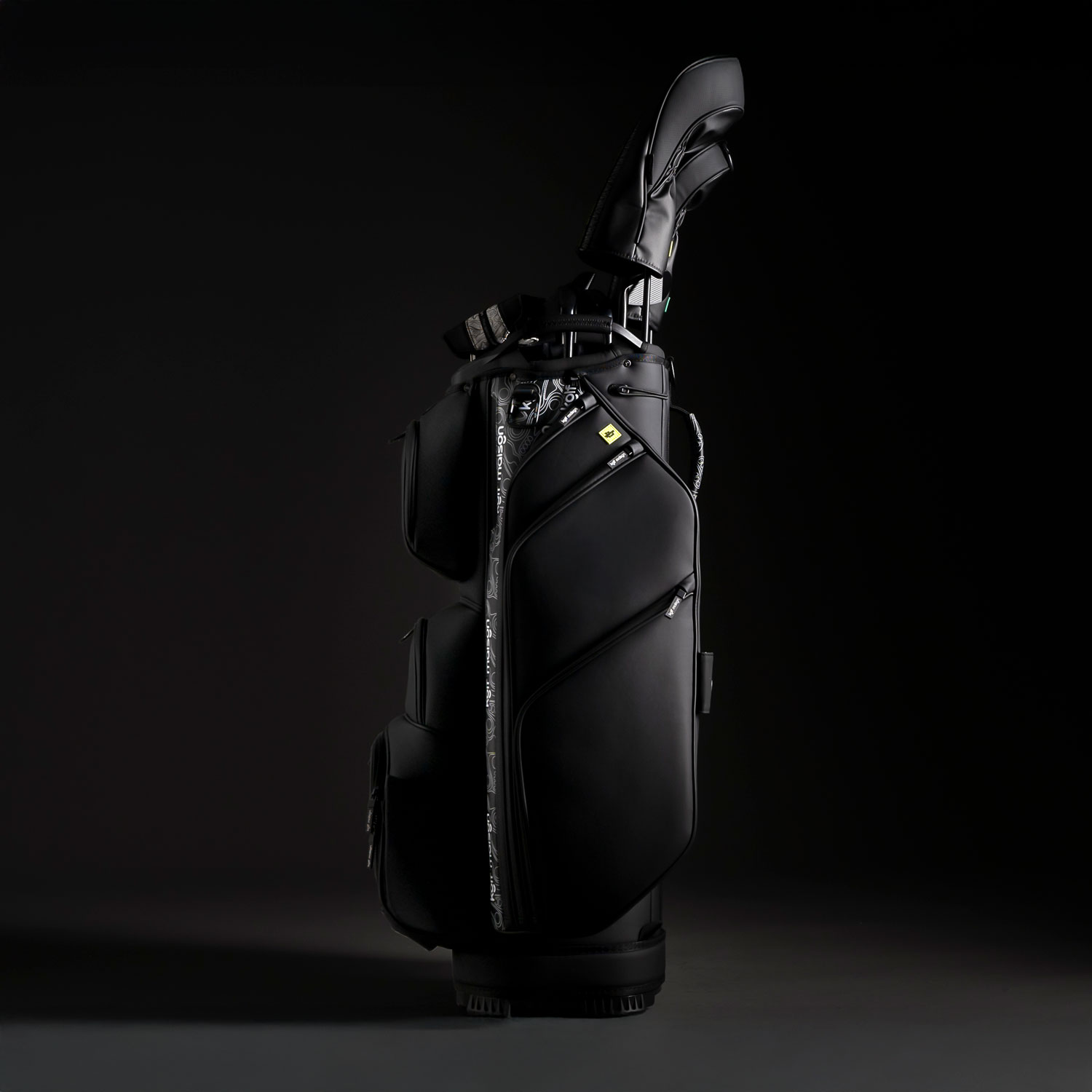
We invite you to experience this engineering firsthand. Whether you prefer the ride of our cart bag or the freedom of the Obsidian Edge Stand Bag, you will find that our commitment to balance is unwavering. Because in golf, as in life, stability is the foundation of success.
Kolf Maison. The Game Itself.